Szoboszlai’s emotional outburst on the pitch, particularly towards the referee, raises questions about his composure under pressure. As a young player who joined Liverpool in July 2023, the expectations for him to exhibit maturity and poise are significant, especially with discussions around potential captaincy in the future.
This incident is particularly relevant as Liverpool seeks to establish a strong leadership core following the departure of veteran players. The club’s management and supporters are evaluating whether Szoboszlai possesses the temperament required for such responsibilities, especially in crucial matches against top-tier opponents.
As Liverpool navigates a competitive season, the ability of its players to maintain focus and professionalism will be essential. Szoboszlai’s recent actions serve as a reminder that while talent is crucial, the qualities of a captain extend beyond skill to include emotional intelligence and the ability to inspire teammates.
Understanding the background of Szoboszlai’s role at Liverpool
Dominik Szoboszlai’s recent outburst during a match at the Etihad Stadium has sparked discussions regarding his readiness to assume the captaincy at Liverpool FC. The Hungarian midfielder, who joined the club in the summer of 2023, has shown immense potential on the field, yet his emotional response during high-pressure situations raises questions about his leadership capabilities.
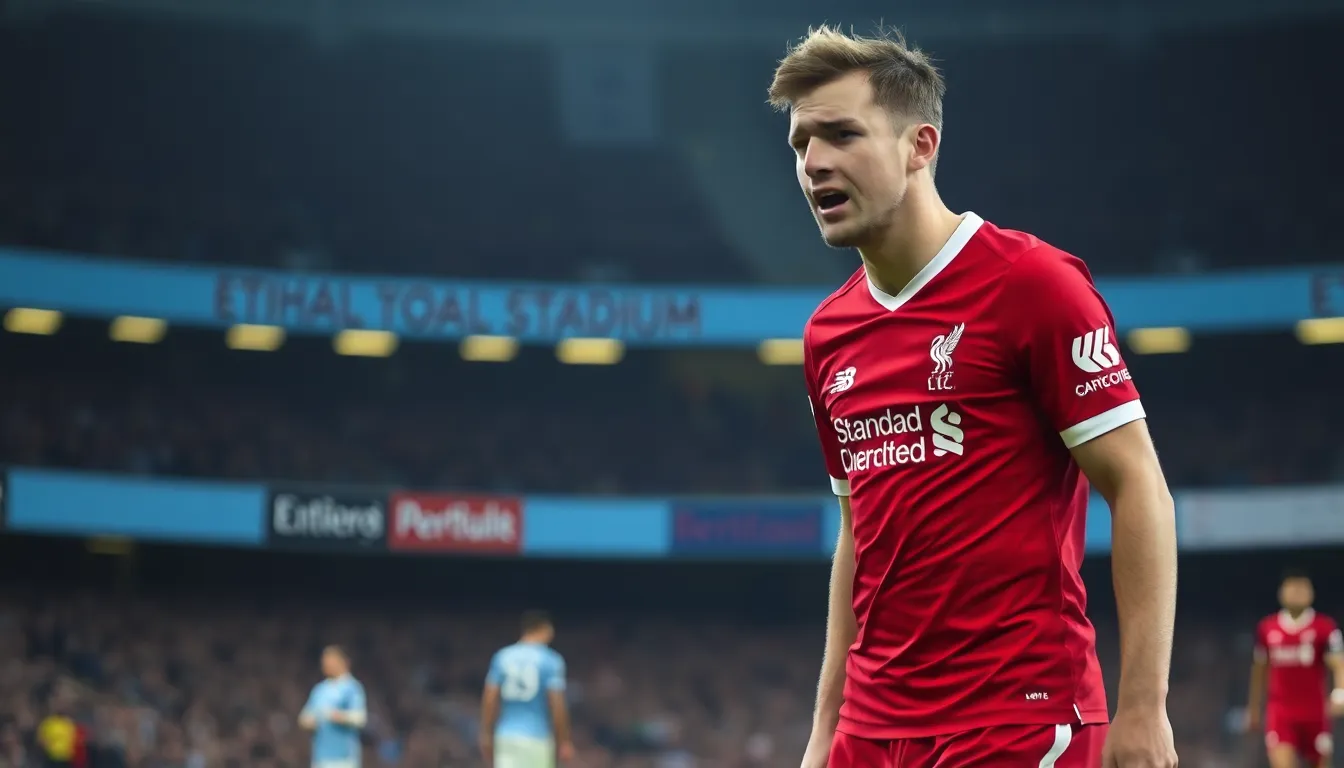
Historically, Liverpool FC has been known for its strong leadership on and off the pitch. The club has had iconic captains such as Steven Gerrard, whose influence and composure were pivotal in guiding the team through challenging matches. Szoboszlai’s outburst highlights a crucial aspect of leadership that extends beyond talent; it encompasses emotional intelligence and the ability to maintain composure under duress.
Economically, the pressure on Szoboszlai is amplified by the significant investment Liverpool made to bring him to Anfield. With a transfer fee reported to be around £60 million, expectations are high for the young midfielder to deliver not only in terms of performance but also in terms of leadership qualities. This financial commitment places additional scrutiny on his actions and decisions during matches.
The Importance of Emotional Control in Leadership
Emotional control is a vital trait for any captain, especially in a competitive environment like the Premier League. Szoboszlai’s reaction during the match against Manchester City demonstrated a moment of frustration that could be viewed as a lack of maturity in handling the pressures of top-flight football. In contrast, seasoned players often display a level of restraint that can inspire their teammates and maintain team morale, a quality that Szoboszlai is still developing.
As Liverpool navigates its current season, the question remains whether Szoboszlai can grow into a leadership role or if the club should look to more experienced players to take on that responsibility. His journey will undoubtedly be closely monitored as he adapts to the demands of playing for one of the most storied clubs in football history.
Analyzing the implications of Szoboszlai’s actions on team dynamics
Dominik Szoboszlai’s recent outburst during the match against Manchester City has raised significant questions regarding his readiness to assume the captaincy at Liverpool FC. As a young player, Szoboszlai’s emotions on the pitch are indicative of his passion and commitment; however, they may also signal deeper issues within the team’s leadership structure and cohesion.
The main actors in this situation include Szoboszlai himself, Liverpool FC management, the coaching staff, and the fanbase. Each of these stakeholders has distinct interests that influence their perspectives on the incident. Szoboszlai, as an emerging talent, seeks to establish himself as a leader, while the management aims to maintain a stable and harmonious team environment.
Conflicts arise when the expectations placed on Szoboszlai clash with his current level of experience. The coaching staff must balance nurturing his potential with the need for discipline and maturity on the field. Additionally, the fans, who have high hopes for Szoboszlai, may become divided in their opinions if his behavior continues to overshadow his performance.
- Leadership Expectations: Szoboszlai’s actions may prompt discussions about what qualities are necessary for a captain in a high-pressure environment like Liverpool.
- Team Morale: The incident could impact team dynamics, influencing how players perceive Szoboszlai’s role and their own responsibilities.
- Media Scrutiny: Increased media attention following the outburst may lead to heightened pressure on Szoboszlai, potentially affecting his performance in subsequent matches.
- Management Decisions: Liverpool’s management might need to reassess their captaincy strategy, weighing the pros and cons of appointing a younger player in such a pivotal role.
Ultimately, the situation encapsulates the broader challenges faced by young athletes in high-stakes environments, where emotional expressions can have far-reaching consequences for both individual players and their teams.
The potential impact on Liverpool’s leadership structure and performance
The recent outburst from Dominik Szoboszlai during the match against Manchester City has raised questions about his readiness to assume a leadership role within Liverpool FC. This situation affects not only Szoboszlai himself but also the team’s dynamics, coaching staff, and the club’s overall performance in the Premier League.
In the short term, Liverpool may experience a shift in team morale and cohesion. If Szoboszlai is perceived as unprepared for captaincy, it could lead to a lack of confidence among teammates and spark debates within the locker room. This internal conflict might affect the players’ focus in upcoming matches, potentially jeopardizing their performance on the field.
From a mid-term perspective, if Szoboszlai’s leadership is questioned, the club might need to reconsider its leadership strategy. This could involve promoting another player to a captaincy role, which may disrupt existing team hierarchies. Additionally, the coaching staff may need to implement new training sessions focused on team-building and leadership development to mitigate any fallout.
- Risks: Decreased team morale, potential loss of matches, and increased scrutiny on Szoboszlai.
- Opportunities: A chance for other players to step up, fostering a more resilient team culture.
- Long-term effects: Shifts in player recruitment strategies focusing on leadership qualities.
The impact extends beyond just the players; it also affects the club’s management and fanbase. Supporters may express their discontent through social media or match attendance, while management will need to navigate public relations carefully to maintain the club’s image. This situation presents both challenges and opportunities for Liverpool as they seek to stabilize their leadership structure amidst these developments.
A: Szoboszlai had a notable outburst during the match, which raised eyebrows regarding his temperament and leadership qualities. A: His recent behavior has led fans and analysts to question whether he possesses the necessary maturity and composure to lead the team. A: The incident may prompt the coaching staff to reconsider their options for team leadership moving forward. A: If concerns about his leadership persist, it could hinder his development and future opportunities within the club. A: Media coverage has been critical, highlighting the need for players to maintain professionalism, especially in leadership roles.
Frequently asked questions about Szoboszlai’s captaincy
Key takeaways and future outlook for Szoboszlai and Liverpool
Dominik Szoboszlai’s recent outburst during the match at the Etihad Stadium has raised questions about his readiness to assume a leadership role at Liverpool. While his passion and commitment are commendable, it is crucial for him to channel these emotions productively as he matures within the team. The incident serves as a reminder that leadership extends beyond skill; it requires composure and the ability to inspire teammates even in challenging situations.
Looking ahead, Liverpool’s management will need to assess Szoboszlai’s development closely. His potential is undeniable, but the club must ensure that he is equipped to handle the pressures that come with being a captain. Observing how he responds to this setback will be key in determining his future role within the squad.
- Monitor Szoboszlai’s emotional responses in upcoming matches to gauge his growth in maturity.
- Evaluate Liverpool’s leadership structure to determine if a more experienced player should take on captaincy responsibilities for now.
- Watch for Szoboszlai’s interactions with teammates, particularly during high-pressure situations, to assess his ability to lead by example.
- Consider how Szoboszlai’s performance in training and matches influences his candidacy for future leadership roles.
- Keep an eye on Liverpool’s overall team dynamics as they adapt to Szoboszlai’s evolving role within the squad.